


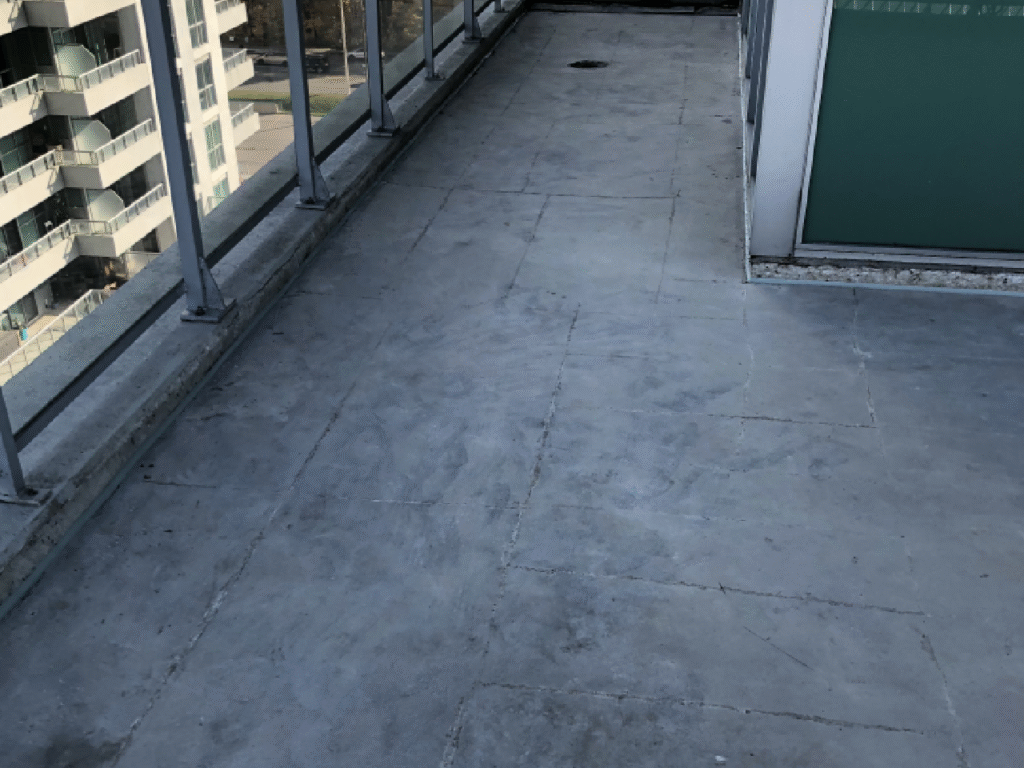
Most building owners discover they needed waterproofing about 3 years after they should have called. By then, the damage is done. Mold is growing. Concrete is spalling. And the repair bill has tripled.
Waterproofing is not glamorous. But it is the single most important investment for your building’s health. In this guide, we show you 7 clear warning signs. Do not ignore them. Each sign gets more expensive the longer you wait.
Sign 1: Efflorescence (White Powder on Concrete or Brick)
Efflorescence looks like a white, chalky dust. It appears on concrete foundations, brick walls, and basement floors.
Here is what it means. Water is moving through your building envelope. It dissolves salts inside the concrete or brick. When the water reaches the surface and evaporates, it leaves the white salt crystals behind.
Efflorescence itself is not dangerous. But it is a definitive proof of moisture movement. Where there is water, there is potential for damage.
What to do: Call a waterproofing professional for an inspection. Do not just wipe it away and hope for the best.
Sign 2: Peeling Paint or Blistering Coatings
Paint should not bubble, blister, or peel on exterior walls. If it does, moisture is pushing from behind the paint film.
Water vapor travels through concrete and masonry. When it hits an impermeable paint layer, it gets trapped. The pressure builds. Eventually, the paint fails dramatically.
This is especially common on stucco and parged foundation walls. A breathable coating would solve the problem. But the underlying moisture source also needs attention. Read our Architectural Coating guide for more information.
Sign 3: Musty Odors in Basements or Parking Garages
That earthy, moldy smell is not normal. It means mold and mildew are growing somewhere in your building.
Mold needs two things to grow: moisture and organic food. Drywall, wood, and dust provide the food. A hidden leak provides the moisture. The smell is the mold releasing volatile organic compounds.
Musty odors often appear before visible mold. Pay attention to your nose. It is an early warning system.
For parking structures, this smell combined with rust stains is a bad sign. See our Garage Repair guide.
Sign 4: Visible Cracks in Foundation or Exterior Walls
Not all cracks are equal. Here is how to tell the difference.
| Crack Type | Likely Cause | Urgency |
|---|---|---|
| Hairline (less than 1/16 inch) | Normal shrinkage | Low, but monitor |
| Vertical (straight up and down) | Settlement | Medium |
| Diagonal (running at an angle) | Uneven settlement | High |
| Horizontal (running sideways) | Soil pressure or hydrostatic pressure | Emergency |
| Stair-step (following mortar joints) | Foundation movement | High |
| Cracks with water stains | Active leakage | Immediate |
Any crack wider than 1/4 inch needs professional evaluation. Horizontal foundation cracks are a structural emergency.
For active leaks through cracks, you need Structural Repair immediately.
Sign 5: Water Stains on Interior Walls or Ceilings
Water stains are obvious. They are brown, yellow, or copper-colored rings on your drywall or plaster. But here is what they tell you.
A stain on a ceiling usually means a leak from above. This could be a roof, a balcony, or a plumbing pipe on the floor above.
A stain on an exterior wall usually means a building envelope leak. Water is getting through the brick, siding, or stucco. It is running down the inside of the wall assembly. Then it soaks into the drywall.
Do not just paint over water stains. The stain will bleed through new paint. More importantly, the active leak will continue causing damage.
Sign 6: Increased Energy Bills (Air Infiltration)
Waterproofing and air sealing go hand in hand. A gap that lets water in also lets air in.
If your heating or cooling bills have spiked, check your building envelope. Drafty windows and gaps in your exterior walls force your HVAC system to work harder.
Sealing these gaps with the right Caulking & Sealant Repair reduces energy bills by 15-30% in many buildings. The waterproofing work pays for itself over time.
Sign 7: Mold or Mildew Growth
Visible mold is the final warning sign. It can appear as black, green, white, or brown patches. It grows on drywall, wood, insulation, and even concrete.
Mold is a health hazard. It triggers allergies, asthma, and respiratory problems. Children, elderly, and people with existing conditions are most at risk.
Do not attempt to clean large mold areas yourself. Disturbing mold releases spores into the air. You need professional remediation combined with waterproofing to stop the moisture source.
The Cost of Delay (A Realistic Timeline)
Water damage compounds quickly. Here is what ignoring these signs costs.
| Time | Damage | Estimated Cost |
|---|---|---|
| Immediate | Small leak, minor stain | 1,000−3,000 |
| 6 months | Mold growth, peeling paint | 5,000−15,000 |
| 1-2 years | Rotted wood, spalling concrete | 20,000−50,000 |
| 3-5 years | Structural damage, full replacement | 50,000−200,000+ |
| Plus | Legal liability, health claims, lost tenants | Priceless |
For condo boards, delaying waterproofing often leads to special assessments. Owners get bills for tens of thousands of dollars. Proactive maintenance avoids this entirely.
Frequently Asked Questions
Q1: How often should a building be waterproofed?
A1: Waterproofing membranes last 15-25 years. Sealants around windows and doors need replacement every 10-15 years. Inspect your building envelope every 3-5 years.
Q2: Can waterproofing be done in winter?
A2: Most liquid membranes require temperatures above 5°C (40°F). Winter work is possible with heated enclosures and cold-weather products. But spring to fall is ideal.
Q3: How long does waterproofing take?
A3: A typical condo building takes 2-6 weeks depending on size. Individual homes take 3-10 days. Most work happens from outside scaffolding or lifts.
Q4: Do residents need to move out during waterproofing?
A4: Usually not. For balcony and exterior wall work, residents stay in their units. There is noise and some window access restrictions. But interior living spaces remain usable.
Q5: Is waterproofing tax deductible for rental properties?
A5: Yes, in most cases. Waterproofing is a repair and maintenance expense for income properties. Consult your accountant for specific advice.
Conclusion
Waterproofing is not an expense. It is an investment. The 7 signs we covered are your building’s way of asking for help. Ignoring them leads to exponentially higher costs. Acting early saves money, protects health, and preserves property value.
Do you see white powder on your foundation? Are your basement walls wet? Do you smell mold in your parking garage? Contact Kavern Restoration today. We are experts in Building Waterproofing and Structural Repair. Ask for a free inspection and comprehensive quote.