


Have you heard the term “building envelope” thrown around by an engineer or property manager and wondered what it actually means? You’re not alone. It’s one of those industry phrases that sounds technical but describes something fairly simple once you break it down.
This guide explains what the building envelope actually is, why waterproofing it as one connected system matters, and how envelope failures show up in real buildings across Toronto and the GTA. If your building is showing signs of water intrusion somewhere, our building waterproofing team can assess the full envelope, not just the spot where water is showing up.
What “Building Envelope” Actually Means
The building envelope is everything that separates the inside of a building from the outside world. That includes the roof, exterior walls, windows, doors, foundation, and balconies. Think of it as the building’s skin — every surface that has to hold back rain, snow, wind, and groundwater at the same time.
Building envelope waterproofing treats all of these components as one connected system, rather than fixing each leak as an isolated problem. This matters more than it might sound, because water doesn’t respect the lines we draw between “roof issues” and “foundation issues.” It just follows the path of least resistance.
Why Treating the Envelope as One System Matters
Here’s a scenario that comes up constantly: a condo board notices water pooling in the underground garage and assumes it’s a foundation problem. They fix the foundation. The leak continues.
What actually happened is that water was entering higher up — through a failed window seal, a cracked balcony, or a gap in the exterior wall — and traveling down through the structure before showing up in the garage. The garage was never the source. It was just the lowest point where the water eventually appeared.
This is exactly why envelope-level thinking matters. A leak’s visible location and its actual entry point are often in completely different parts of the building.
The Main Components of a Building Envelope
Roof and Roof Drainage
The roof handles the most direct water exposure of any envelope component. Poor drainage, aging membranes, or damaged flashing here can send water traveling down through walls before it ever becomes visible inside.
Exterior Walls
Brick, stucco, siding, and concrete walls all need to resist wind-driven rain and moisture absorption. Cracks, failed caulking, and aging coatings are common entry points here.
Windows and Doors
The seals and flashing around window and door openings are some of the most common failure points in the entire envelope. A small gap here can let in a surprising amount of water over time.
Balconies
Balconies combine several envelope components at once — waterproofing membrane, railings, drainage, and the slab itself. Because they’re horizontal and directly exposed to standing water, they’re especially vulnerable to failure.
Foundation and Below-Grade Walls
Below-grade portions of the envelope deal with groundwater and hydrostatic pressure rather than rain. This is where foundation waterproofing in Toronto typically focuses, since the pressure and moisture source are different from what the above-grade envelope faces.
Expansion Joints
These joints let a building move naturally with temperature changes, but they’re also common water entry points if the sealant inside them fails.
Common Signs of Building Envelope Failure
- Water stains appearing on interior walls or ceilings, sometimes far from any obvious exterior damage
- Musty odors or visible mold in areas that shouldn’t be damp
- Efflorescence, or white chalky staining, on exterior brick or concrete
- Peeling paint or bubbling drywall caused by trapped moisture
- Water pooling in a parking garage with no clear source nearby
- Rising heating or cooling costs, which can indicate air and moisture leaks through the envelope
If you’re seeing more than one of these signs, especially in different parts of the building, it’s worth getting a full envelope assessment rather than treating each symptom separately.
How a Proper Envelope Assessment Works
- Interior and exterior inspection — checking every envelope component, not just the area where water is visible
- Moisture mapping — using moisture meters and thermal imaging to trace water paths through walls and slabs
- Dye testing — confirming suspected entry points by introducing water at a specific location and watching where it appears
- Prioritizing repairs — addressing the actual source first, even if it’s not the most visible symptom
- System-wide waterproofing — applying the right membrane or coating for each specific component, since roofs, walls, and foundations all need different systems
Building Envelope Waterproofing vs. Single-Point Repairs
A single-point repair fixes what’s visible right now. Envelope waterproofing asks a bigger question: is this leak isolated, or is it one symptom of a broader issue affecting multiple building systems? For older buildings, or ones that have had recurring leaks despite previous repairs, this system-wide view often reveals the real problem that spot repairs kept missing.
This is also where the distinction between residential and commercial approaches matters. A single home’s basement waterproofing cost in Toronto is usually a contained, single-system project. A commercial or condo building’s envelope waterproofing spans multiple systems, multiple contractors’ previous work, and often years of patchwork repairs layered on top of each other.
Parking Garages: A Common Envelope Blind Spot
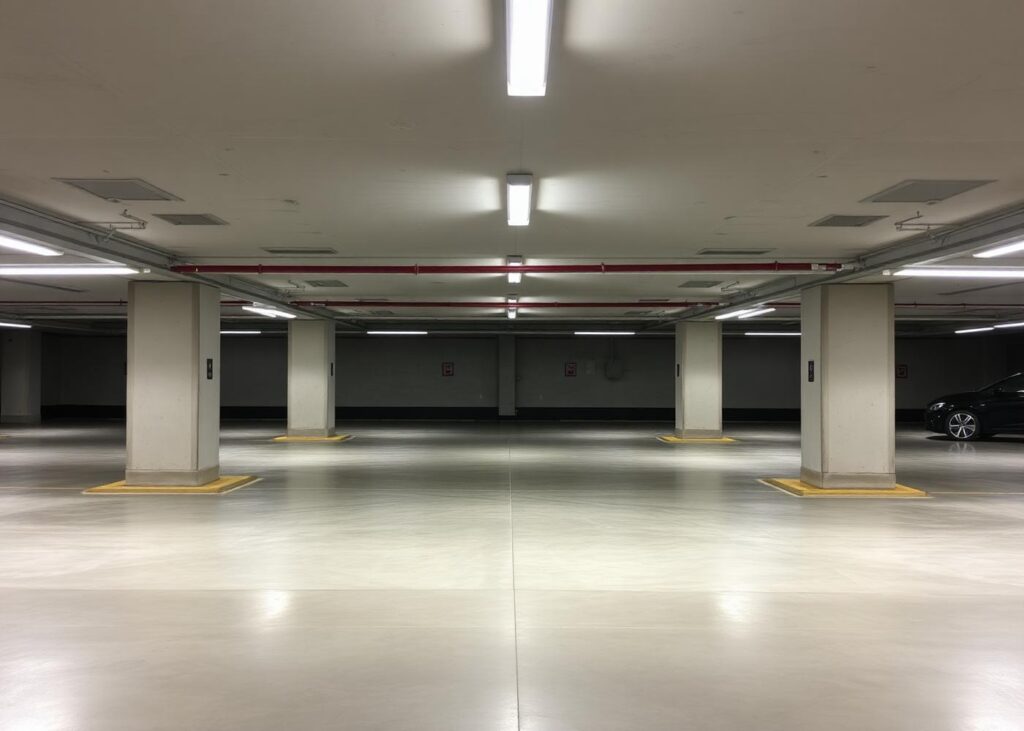
Underground and above-grade parking garage waterproofing in Toronto is frequently treated as its own isolated project, but garages often sit at the bottom of the envelope’s water path. Podium decks, ramps, and below-grade walls all connect to the larger building system above them. Waterproofing a garage without checking what’s happening above it can mean fixing the symptom while the actual source keeps sending water downward.
Choosing a Commercial Waterproofing Contractor for Envelope Work
Envelope-level projects need broader expertise than a single-system leak repair. Ask any commercial waterproofing contractor in Toronto these questions before hiring for envelope work:
- Do you assess the whole envelope, or only the area where the leak is visible?
- How do you trace water back to its actual entry point when it’s traveled through the structure?
- Do you coordinate roof, wall, and foundation waterproofing as one project, or treat them separately?
- What’s your experience with buildings that have had recurring leaks despite previous repairs?
- How do you sequence a multi-system waterproofing project without disrupting residents or tenants?
A Note for Condo Boards and Property Managers
Recurring leaks that keep coming back after repairs are one of the clearest signs of an envelope-level issue rather than an isolated one. Building an envelope condition assessment into your capital planning cycle — rather than authorizing another one-off patch — can save your board from paying for the same leak repair multiple times over several years.
Final Thoughts
Building envelope waterproofing treats your building’s roof, walls, windows, balconies, and foundation as one connected system rather than a collection of separate problems. Water doesn’t stay within the lines we draw between building components, so tracing it back to its real source — wherever that happens to be — is the only way to fix a leak permanently rather than temporarily.
If your garage or below-grade area is showing signs of water intrusion, our guide on how to stop water leaking into an underground garage covers what that specific investigation typically involves. Explore our full building waterproofing Toronto services for a complete envelope assessment of your property.
Ready for a Full Envelope Assessment?
If a leak keeps coming back no matter what’s been tried, the real source is probably somewhere you haven’t looked yet. A proper envelope assessment traces the water to where it’s actually entering, not just where it’s showing up.
Book a free consultation with our team, or call us directly at 905-503-5565 to schedule an inspection. We work with condo boards, property managers, and commercial properties across Toronto and the GTA.
Frequently Asked Questions
1. What is building envelope waterproofing? It’s the practice of waterproofing a building’s roof, walls, windows, balconies, and foundation as one connected system, rather than treating each leak as an isolated problem. This approach helps trace water back to its actual entry point.
2. What are the main parts of a building envelope? The roof, exterior walls, windows and doors, balconies, foundation, and expansion joints all make up the building envelope. Each one plays a role in keeping water and air out of the structure.
3. Why does my leak keep coming back after repairs? Recurring leaks often mean the repair addressed a symptom rather than the actual source. Water can travel through the structure from a completely different part of the envelope before appearing where you see it.
4. How is envelope waterproofing different from fixing a single leak? A single-point repair fixes the visible damage in one spot. Envelope waterproofing assesses the whole building system to find and address the real source, which may be far from where the leak appears.
5. Do parking garages count as part of the building envelope? Yes. Garages, especially below-grade and podium levels, are often the lowest point where water traveling down through the envelope eventually appears, even if the original entry point is elsewhere in the building.
6. How do professionals find where water is really entering a building? Moisture meters, thermal imaging, and dye testing help trace water paths through walls and slabs, confirming the actual entry point rather than relying on where the leak happens to show up.
7. Is envelope waterproofing more expensive than a single repair? It depends on the scope of the actual problem. A single-point repair can seem cheaper upfront, but if it doesn’t address the real source, the leak often returns, leading to repeated repair costs over time.
8. Do condo boards need an engineer for envelope assessments? Larger or more complex envelope issues often benefit from a building envelope engineer’s involvement, particularly when multiple systems are affected or previous repairs haven’t resolved the problem.
9. How often should a building’s envelope be inspected? A general visual inspection on a yearly basis is a reasonable baseline, with a more thorough professional envelope assessment every few years, especially for older buildings or ones with a history of recurring leaks.