


Has your board decided it’s time to get a clear picture of the building’s real condition? Or are you buying, selling, or planning major repairs and need facts before you commit? Either way, the question is the same: how do I get a property condition assessment done?
The process is more straightforward than it sounds. You define why you need it, gather your documents, hire the right licensed professional, and turn the report into a repair plan.
This guide walks through each step, what an assessment covers, and how to choose an assessor. When your report identifies repairs, get a quote from Kavern and we’ll price them on the same scope.
Quick answer: To get a property condition assessment done, define why you need it, gather your building documents, and hire a licensed engineer or architect to inspect the building’s structure, envelope, roofing, and systems. You’ll receive a report rating each component and prioritizing repairs, which you then use to plan the work and request contractor quotes.
What Is a Property Condition Assessment?
A property condition assessment (PCA) is a professional review of a building’s physical condition. It documents what’s in good shape, what’s deteriorating, and what needs attention, usually with photos, condition ratings, and recommended timing.
It’s often confused with other reviews. Here’s how they differ:
| Type | What it covers | Who does it | Typical use |
|---|---|---|---|
| Property condition assessment | Overall condition of structure, envelope, roofing, and building systems | Licensed engineer or architect | Purchases, planning, capital projects |
| Targeted condition assessment | One system, such as balconies, garage, masonry, or envelope | Engineer or specialist consultant | Investigating a known problem |
| Reserve fund study | Long-term forecast of repair and replacement needs | Qualified reserve fund study provider | Condo planning cycles |
| Home inspection | A single house’s condition | Home inspector | House purchases |
The reports often feed each other. A PCA can identify what to investigate further, and it informs the timing in a reserve fund study.
Who Needs a Property Condition Assessment, and When?
Common reasons include:
- Buying or selling a commercial or multi-residential building
- Planning capital work, such as balconies, garage, masonry, or envelope repairs
- A board or owner wanting a clear baseline of the building’s condition
- Lender or insurer requests
- Recurring problems, like leaks, cracking, or spalling, where the cause isn’t clear
- Portfolio planning across several properties
How Do I Get a Property Condition Assessment Done? Step by Step
- Define why you need it. Purchase, planning, or a known problem all call for different scopes. Write the goal down first.
- Decide the scope. A full PCA looks at the whole building. A targeted assessment focuses on one system.
- Gather your documents. Drawings, past reports, your reserve fund study, maintenance records, warranties, permits, and leak or complaint logs all help.
- Choose the assessor. In Ontario, look for a licensed professional engineer (through Professional Engineers Ontario) or architect (through the Ontario Association of Architects) with experience in your building type.
- Request proposals and compare scope. Check what’s included: roof access, testing, drone surveys, mechanical and electrical specialists, and report format.
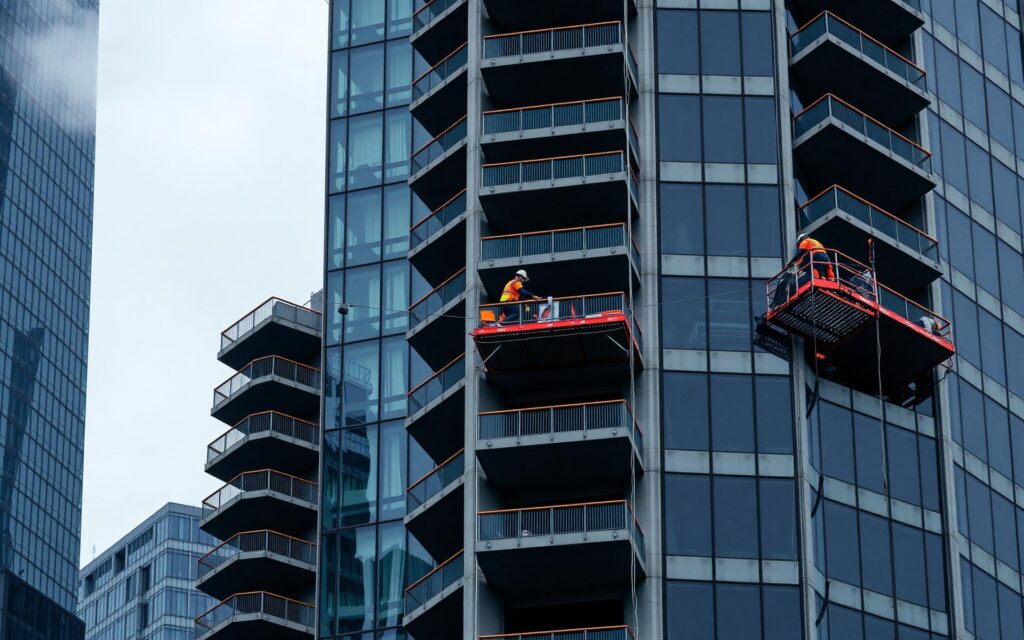
- Arrange access. Plan for roofs, mechanical rooms, garages, and sample units. Tall buildings may need swing stage or boom lift access, and residents need notice.
- Support the site visit. The assessor inspects, photographs, and may run non-destructive tests such as sounding or moisture readings.
- Review the report with your team. Ask questions, then sort findings into immediate, short-term, and long-term items.
- Turn findings into a plan. For larger repairs, your engineer prepares a specification. Contractors then quote the same defined scope.
What a Property Condition Assessment Covers
Scope varies, but most assessments look at:
- Structure: foundations, slabs, columns, and framing
- Building envelope: walls, cladding, windows, doors, and sealants
- Balconies and terraces: slabs, railings, and waterproofing
- Roofing and roof drainage
- Waterproofing: plaza decks, below-grade walls, and parking garages
- Mechanical and electrical systems
- Life safety and elevators
- Site conditions: grading, drainage, and paving
Many findings lead straight to a restoration scope. For example, balcony restoration, masonry restoration, underground garage repairs, and stucco restoration.
How to Choose the Right Assessor
Look for:
- A licensed engineer or architect in Ontario
- Experience with your building type, whether it’s a condo tower, a mid-rise, or a commercial property
- Independence. An assessor who isn’t bidding on the repairs gives you an unbiased scope.
- A clear scope and deliverables, including photos, ratings, and prioritized recommendations
- Appropriate insurance
- A sample report, so you know what you’ll receive
- Availability, since timing affects your planning
Contractors can inspect and advise on repair methods, and their field knowledge is valuable. But for condo capital projects, boards generally rely on an independent engineer’s report so every contractor quotes the same scope. Our list of questions to ask before hiring a restoration contractor helps once you reach that stage.
How to Prepare
A well-prepared building gets a faster, more accurate assessment.
Documents
- Original drawings and past repair records
- Previous engineering reports and your reserve fund study
- Warranty and permit records
- Leak, complaint, and maintenance logs
Access
- Keys or codes for roofs, mechanical rooms, and garages
- Sample unit access, with resident notice
- A contact person who knows the building’s history
What the Report Includes
Expect these sections:
- Executive summary of overall condition
- Building description and methodology
- Findings by system, with photos
- Condition ratings
- Prioritized deficiencies: immediate, short-term, and long-term
- Recommended repairs and next steps
- Limitations and exclusions
Ask the assessor to walk you through it. Focus first on anything flagged as a safety issue or as likely to worsen quickly. Not every finding needs action right away, and the priority ranking helps you sequence the work.
Turning the Report Into a Repair Plan
- Address safety items first. Falling concrete, loose railings, and active leaks near electrical come first.
- Group related work. Balconies, envelope, and garage repairs often share access and mobilization.
- Have the engineer prepare a specification for larger projects.
- Ask contractors to quote the same scope, then compare line by line.
- Plan the phasing and resident communication.
- Align timing with your reserve fund study.
Our guides on commercial balcony restoration, underground garage and parking structure repair, commercial masonry restoration, and building envelope waterproofing show what typical repairs involve.
Full PCA or Targeted Assessment?
Full property condition assessment
Pros
- A complete baseline across all major systems
- Helps you plan and prioritize long-term work
- Useful for purchases and portfolio decisions
Cons
- Broader scope takes longer
- May not go deep enough on a single problem area
Targeted assessment
Pros
- Focused, detailed investigation of one system
- Quicker when you already know where the problem is
Cons
- Can miss related issues elsewhere in the building
- Doesn’t give a whole-building baseline
If you’re not sure, start broad. A full PCA often shows where a targeted follow-up is needed.
How Kavern Helps
Kavern Building Restoration is WSIB-certified and fully insured. We work alongside engineers and architects as a field-execution partner for restoration specifications, and we support property managers and owners and boards once an assessment is done.
Have your report in hand? Send it to us and we’ll quote the repairs on the same scope. We also offer input on repair methods and access so your plan reflects what’s practical to build. Our process includes site inspection, assessment, a board-ready proposal, execution, and third-party engineering sign-off on every phase.
[Add a first-hand note here: 2–3 sentences from a Kavern project lead on how an engineer’s report shaped a real project. For example, how the report’s priorities changed the sequencing on a building you’ve worked on.]
Frequently Asked Questions
How do I get a property condition assessment done?
Define your goal, gather your documents, and hire a licensed engineer or architect experienced with your building type. They inspect, then deliver a report with prioritized recommendations.
Who performs a property condition assessment in Ontario?
Usually a licensed professional engineer or architect, sometimes with specialist consultants for roofing, envelope, or mechanical systems.
What’s the difference between a PCA and a home inspection?
A home inspection reviews a single house. A PCA is a broader professional assessment of a commercial or multi-residential building’s structure, envelope, and systems.
What’s the difference between a PCA and a reserve fund study?
A PCA documents current condition. A reserve fund study forecasts long-term repair and replacement needs for a condo corporation. They complement each other.
How long does a property condition assessment take?
It depends on building size, scope, and access. Larger buildings take longer, and report writing follows the site work. Ask your assessor for a schedule up front.
Do I need to be present during the assessment?
A property manager or owner’s representative should either attend or arrange access and answer questions about the building’s history.
Does a PCA include destructive testing?
Typically it’s visual, with limited non-destructive tests. Coring, probes, and other intrusive testing are scoped separately.
Can a contractor do the assessment?
Contractors can inspect and advise on repairs. For larger projects, boards usually rely on an independent engineer so every contractor quotes the same scope.
Who arranges a property condition assessment for a condo?
The corporation, typically through the board or property manager. See the Condominium Authority of Ontario for guidance on maintenance responsibilities.
How quickly can I get a quote on the repairs?
Kavern responds to every inquiry within one business day.
Conclusion
Getting a property condition assessment done comes down to a clear goal, good documents, and the right licensed assessor. The report is only the start. It becomes valuable when you turn its priorities into a defined scope and a realistic repair plan.
Have a report and need the work priced? Get a quote right now. Call 905 503 5565 or request a quote online. Our team responds within one business day.