


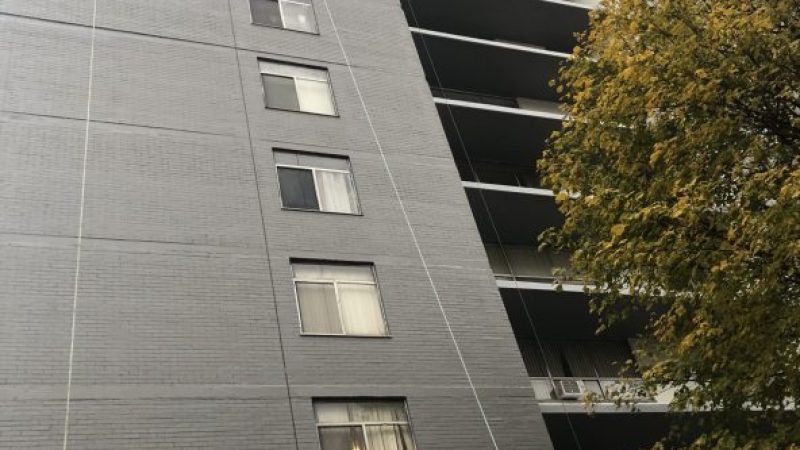
Have you noticed chunks of concrete flaking away, or rust stains bleeding through a slab in your parking garage or balcony? That’s concrete spalling, and it’s one of the most common structural issues we see across Toronto and the GTA.
This guide explains exactly what causes spalling in these two specific areas, why garages and balconies are so prone to it, and how to tell when it’s a cosmetic fix versus a bigger structural concern. If you’re already seeing damage, our concrete repair team inspects buildings across the GTA and can confirm what’s happening beneath the surface.
What Concrete Spalling Actually Is
Spalling happens when the surface layer of concrete breaks, flakes, or peels away. You’ll often see chunks missing, exposed rebar, or a rough, crumbling texture where the concrete used to be smooth. It’s almost always driven by something happening beneath the surface, not just wear on top.
This is different from a simple concrete crack repair Toronto situation, where you’re dealing with a fracture line rather than material loss. Cracks and spalling often show up together, but they don’t always share the same root cause.
Why Parking Garages and Balconies Are Especially Prone to Spalling
Both of these structures share a common problem: constant exposure to moisture, combined with embedded steel reinforcement sitting close to the surface. That combination is exactly what drives spalling. But each one gets there through a slightly different path.
Parking Garages
Garage slabs deal with de-icing salt tracked in on vehicle tires all winter long. That salt works its way into the concrete every time a car drives in from a snowy street. Add constant vehicle weight, exhaust exposure, and limited ventilation, and you’ve got one of the harshest environments any concrete structure faces.
Balconies
Balconies face the same freeze-thaw stress as garages, but without the vehicle traffic. Instead, they take direct exposure to rain, snow, and ice sitting right on the slab surface. Poor drainage design, aging waterproofing membranes, and railing anchor points all create additional entry paths for water.
The Core Causes of Concrete Spalling
1. Water Intrusion
Water is the root cause behind nearly every spalling case. It gets into the concrete through cracks, failed membranes, or simply through the natural porosity of the material. Once inside, it reaches the embedded steel reinforcement and starts a chain reaction.
2. Rebar Corrosion
This is the mechanism that actually causes the visible damage. Once water reaches the steel rebar inside concrete, it starts to rust. Rusted steel expands to several times its original size. That expansion pushes outward from inside the concrete, cracking and eventually breaking off the surface layer above it.
3. Freeze-Thaw Cycling
Toronto sees more than 40 freeze-thaw cycles most winters. Water trapped in concrete pores freezes, expands by roughly 9%, and stresses the material from within. Repeated year after year, this cycle steadily weakens the surface layer.
4. Chloride and Salt Exposure
De-icing salts accelerate rebar corrosion significantly compared to plain water alone. This is why parking garages, ramps, and salt-exposed balconies tend to spall faster than similar concrete in drier, salt-free environments.
5. Insufficient Concrete Cover
Some spalling problems trace back to original construction. If rebar was installed too close to the surface, with too little concrete covering it, water reaches the steel much faster than it should. This is a common issue in older buildings built before modern cover requirements became standard.
6. Poor Drainage
Standing water on a balcony or garage deck gives moisture far more time to penetrate the surface. Clogged drains, improper slope, or damaged waterproofing membranes all contribute to water sitting where it shouldn’t.
7. Structural Loading and Vibration
In parking garages specifically, the constant weight and movement of vehicles adds mechanical stress on top of the chemical and freeze-thaw damage already happening. This combination can accelerate spalling in high-traffic areas like ramps and entry points.
How to Spot Spalling Before It Gets Worse
- Visible cracking, especially in a spider-web or map-like pattern
- Rust-coloured staining bleeding through the concrete surface
- Chunks of concrete missing, exposing aggregate or rebar underneath
- A hollow or drum-like sound when you tap the surface (a sign of delamination)
- Soft or bouncy spots underfoot on a balcony slab
- Efflorescence, or white chalky staining, near cracks or joints
Delamination is worth paying close attention to. It means the concrete has separated into layers below the surface, even if the top still looks intact. A simple sounding test — tapping the surface and listening for a hollow tone — can catch this before it becomes visible spalling.
Why Spalling Is a Structural Issue, Not Just a Cosmetic One
It’s tempting to treat spalling as an appearance problem, especially when it’s small. But once rebar corrosion starts, it doesn’t stop on its own. The rust keeps expanding, the surrounding concrete keeps cracking, and the damage spreads outward from the original spot.
Left unaddressed, this process can compromise the load-bearing capacity of a slab, ramp, or balcony over time. In parking garages, this becomes a safety concern for both vehicles and pedestrians. On balconies, it’s a direct risk to residents using the space above or below the affected slab.
Concrete Spalling Repair vs. Concrete Crack Repair
These two services often get confused, but they’re not identical.
Concrete spalling repair addresses areas where material has already broken away. This typically involves removing damaged concrete back to sound material, cleaning corroded rebar, and rebuilding the area with repair mortar.
Concrete crack repair in Toronto addresses fractures that haven’t yet caused material loss. Depending on severity, this can involve epoxy injection, routing and sealing, or monitoring if the crack is stable and non-structural.
Many projects need both services together, especially once spalling has been active for a while and secondary cracking has started to spread from the original damaged area.
When Spalling Points to a Bigger Structural Issue
Not every spalled patch is an isolated problem. Widespread spalling across a garage deck, spalling near load-bearing columns, or spalling combined with visible sagging or movement all suggest something more serious than surface-level damage. In these cases, a structural repair assessment is worth getting before any cosmetic patching begins, since the underlying reinforcement may need engineering-level evaluation.
Foundation walls face many of the same water and freeze-thaw pressures as garages and balconies, just below grade instead of above it. If you’re noticing spalling near a foundation wall, understanding foundation repair cost in Toronto starts with the same question: how far has water already traveled into the structure, and is the reinforcement still sound.
Choosing a Concrete Restoration Company in Toronto
Since spalling can range from a small cosmetic patch to a significant structural repair, it’s worth asking any concrete restoration company in Toronto these questions before hiring:
- Do you test for delamination, or only address what’s visible on the surface?
- How do you handle corroded rebar during the repair process?
- What repair mortar or system do you use, and is it rated for the exposure the concrete faces?
- Do you involve a structural engineer when damage suggests something beyond surface repair?
- How do you sequence repairs in an active parking garage without shutting down full access?
A Note for Condo Boards and Property Managers
Spalling in a shared parking garage or common-element balcony is usually the corporation’s responsibility to address, and catching it early is far more manageable than waiting for a resident complaint or a visible safety hazard. Building a concrete condition review into your regular capital planning cycle helps your board budget realistically, rather than facing an urgent repair after damage has already spread. If your building has underground parking specifically, our underground garage structure repairs team deals with this exact combination of salt exposure, traffic loading, and moisture every day.
Final Thoughts
Concrete spalling in parking garages and balconies almost always comes down to the same core mechanism: water reaching embedded steel, causing it to corrode and expand. Freeze-thaw cycles, de-icing salt, poor drainage, and original construction quality all influence how fast that process moves. Catching it early — before delamination spreads or rebar corrosion accelerates — keeps a manageable repair from turning into a major structural project.
If your building is also dealing with balcony-specific spalling, our guide on balcony restoration cost in Toronto covers what that repair process typically involves. Explore our full concrete repair Toronto services for a professional assessment of your property.
Frequently Asked Questions
1. What causes concrete spalling in parking garages and balconies?
Spalling is mainly caused by water reaching embedded rebar and causing it to corrode and expand. Freeze-thaw cycles, de-icing salt exposure, poor drainage, and insufficient concrete cover over the rebar all accelerate this process.
2. Is concrete spalling dangerous?
It can be. Small, isolated spalling is usually manageable, but widespread spalling or spalling near structural columns can affect the load-bearing capacity of the slab and should be assessed by a professional.
3. How is concrete spalling different from a concrete crack?
Spalling involves material actually breaking away from the surface, exposing rebar or aggregate underneath. A crack is a fracture line that hasn’t yet caused material loss, though cracks and spalling often occur together.
4. Why do parking garages spall more than other concrete structures?
Garages face a harsh combination of de-icing salt, constant vehicle weight, and limited drainage, all of which accelerate rebar corrosion compared to concrete in drier, salt-free environments.
5. Can spalled concrete be repaired, or does the whole slab need replacement?
Most spalling can be repaired by removing the damaged concrete, treating the corroded rebar, and rebuilding the area with repair mortar. Full slab replacement is usually only necessary when damage is extensive or structural integrity is compromised.
6. How do I know if spalling is a structural issue? Widespread spalling, damage near load-bearing columns, or spalling combined with visible sagging or movement are signs the issue may go beyond surface-level repair and warrant a structural assessment.
7. What is delamination, and how is it different from visible spalling? Delamination means the concrete has separated into layers below the surface, even though the top may still look intact. A hollow sound when tapping the surface is a common sign, and it often precedes visible spalling.
8. Does foundation wall spalling work the same way as garage or balcony spalling? Yes, the underlying mechanism is the same — water reaching rebar and causing corrosion — though foundation walls face this pressure below grade rather than from surface exposure or vehicle traffic.
9. How can I prevent concrete spalling in my building? Keep drainage systems clear, address cracks and failed waterproofing promptly, and schedule regular concrete inspections. Catching early corrosion before it spreads is far more manageable than repairing widespread spalling later.